Architecting a conceptual platform that translates pre-linguistic memory into high-precision olfactory formulas.
Modern fragrance commerce is fundamentally broken. We select products based on visual marketing and celebrity endorsements, rather than olfactory truth.
Industry analysis revealed a 60% abandonment rate in digital "scent quizzes," primarily driven by a disconnect between qualitative user stories and quantitative molecular results. YouScent was triggered as a response to this market void: a mission to build a "Mentor" system that translates pre-linguistic memory into verified chemistry.
The "Inarticulate Scent" barrier prevents users from converting qualitative memory into molecular intent. We analyzed the ecosystem through the 3C-1P framework to isolate the friction.
Users lack the olfactory vocabulary to describe intent.
Existing quizzes rely on generic archetypes, leading to 60% attrition.
Traditional UI fails to translate pre-linguistic data into validated trust.
A photo of a cluttered retail fragrance counter, or a diagram mapping the friction and cognitive overload in a traditional scent discovery journey.
Research Synthesis · 2025
| Feature | Scentbird | Phlur | Commodity | YouScent |
|---|---|---|---|---|
| Olfactory Vocabulary | ○ | ○ | ○ | ● |
| User Agency | ○ | ○ | ○ | ● |
| Personalization Depth | ○ | ○ | ○ | ● |
| Trust Signal | ○ | ○ | ○ | ● |
"Marketing heavy, but ignores the pre-linguistic memory of the user."
"Good recommendations, but the user feels like a passenger, not a creator."
"A collaborative system that respects memory as the primary data point."
"The system must explain the 'why'."
"Translate it to a color or sound."
"Transparency is non-negotiable."
"Don't replace the human hand."
An affinity map from user interviews, user personas, or competitive analysis screenshots of standard, overwhelming e-commerce fragrance filters.
80% of our participants described fragrance using location-based memories (e.g., "my father's leather chair", "rain on hot pavement") rather than olfactory families.
We developed a proprietary tri-axial framework to quantify the unquantifiable. This isn't a quiz; it's a sensory translation layer.
Quantifying narrative anchors—time, place, and presence—to trigger biological nostalgia.
Mapping aspirational traits and behavioral archetypes to olfactory family families.
Encoding pre-linguistic feelings (calm, bold, grounded) into raw molecular intensity.
Setting tone, explaining the MPE method.
Multi-sensory data capture narrative.
Transparent molecular mapping.
Personalized scent profile & purchase.
System built on a 4px grid. All glass membranes utilize backdrop-blur at 24px precision to maintain depth without sacrificing legibility.
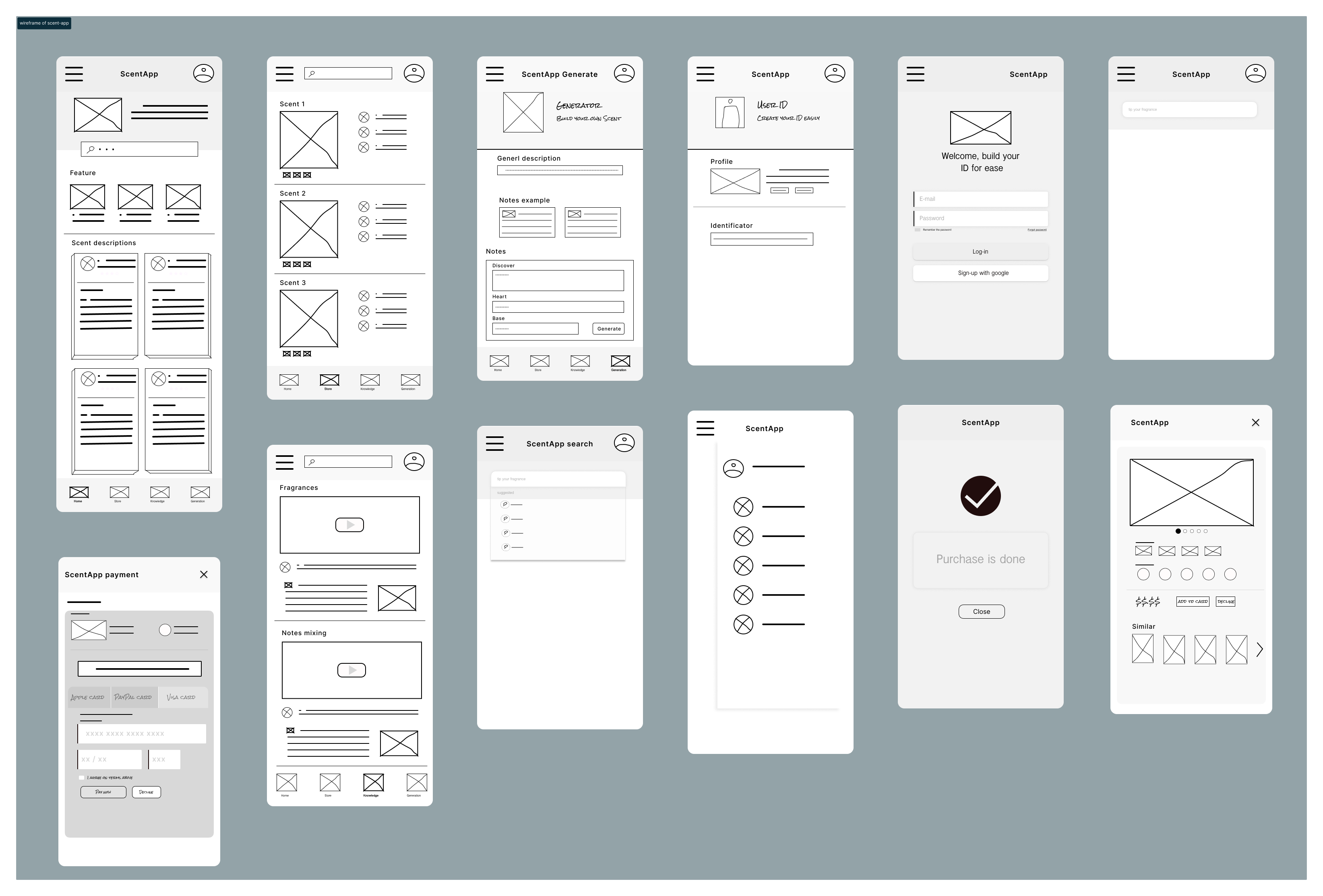
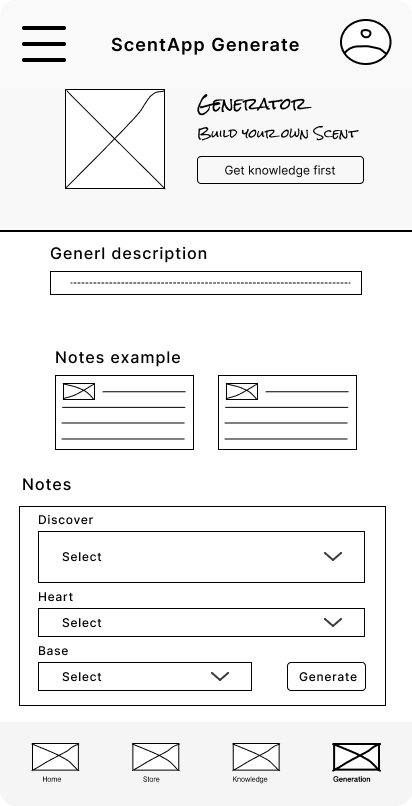
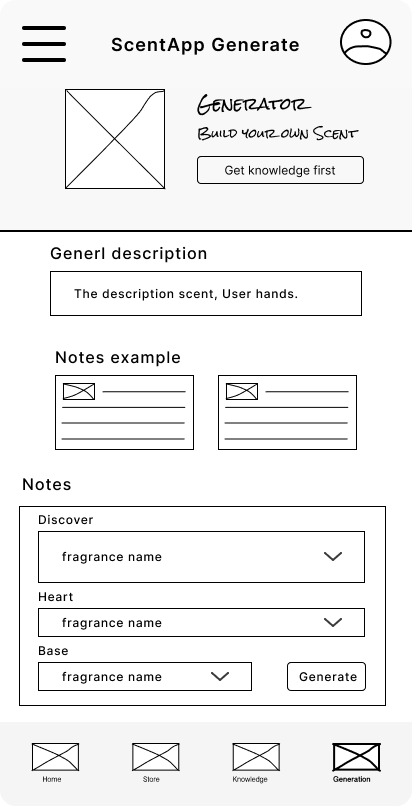
Mapping the initial 'ScentApp' architecture revealed a bloated feature set that prioritized conventional e-commerce over a guided personal journey.
Early low-fidelity concepts highlighted the flaw of a standard catalog model, which failed to address the emotional core of scent selection.
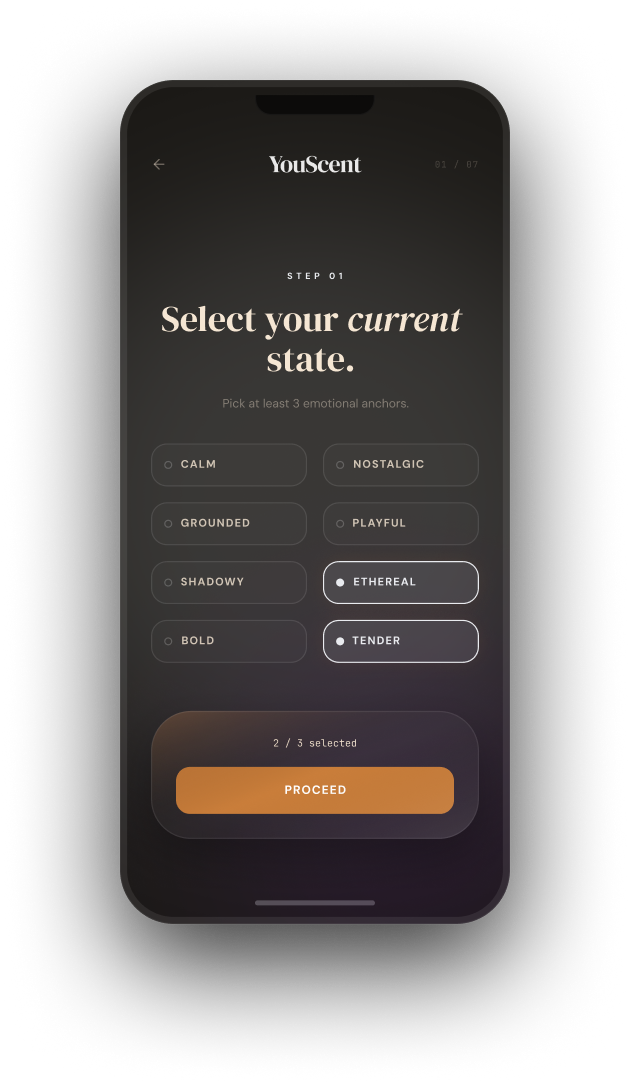
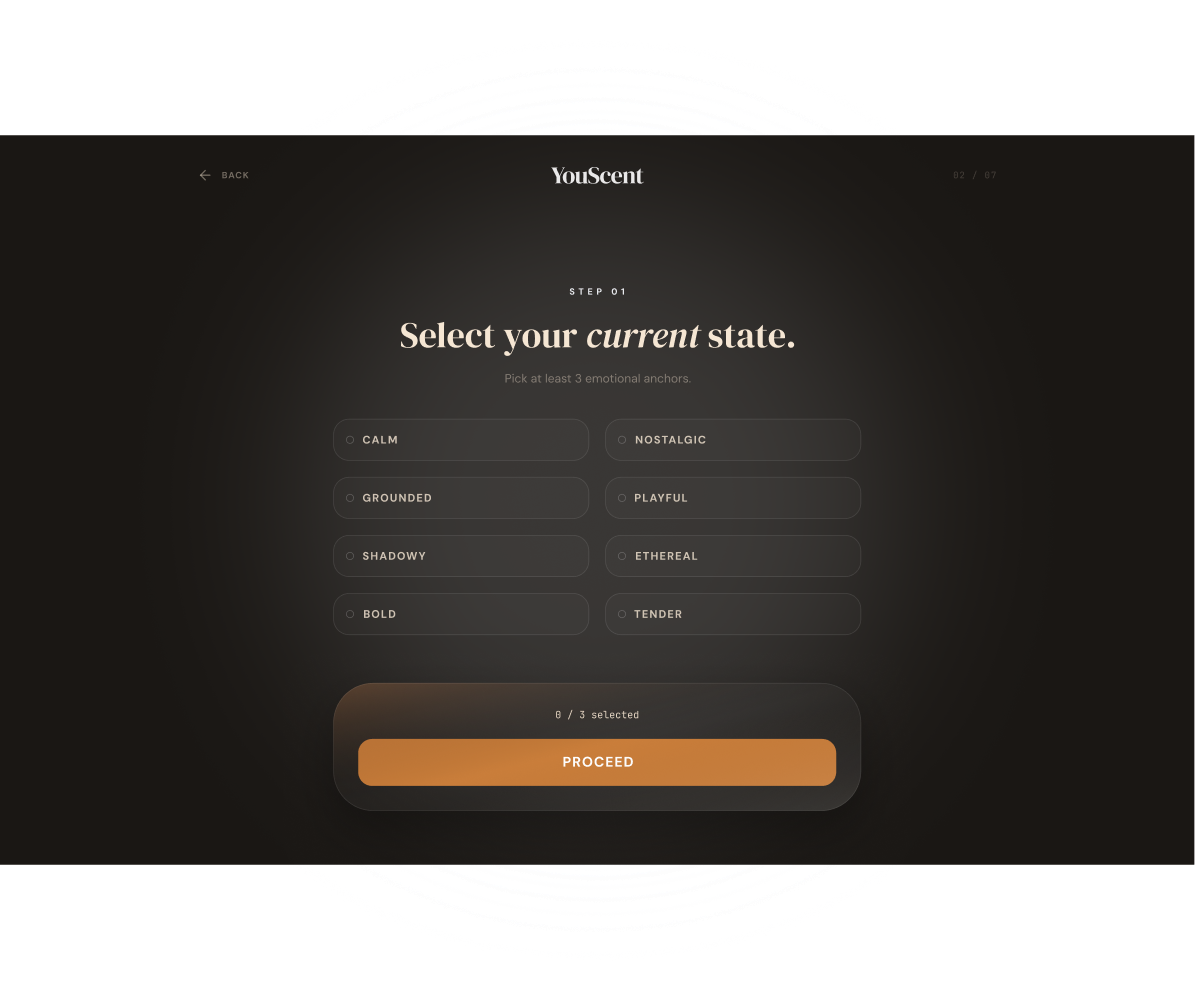
Replacing generic input forms with tactile emotion chips shifted the user's mental model from data entry to intuitive self-expression.
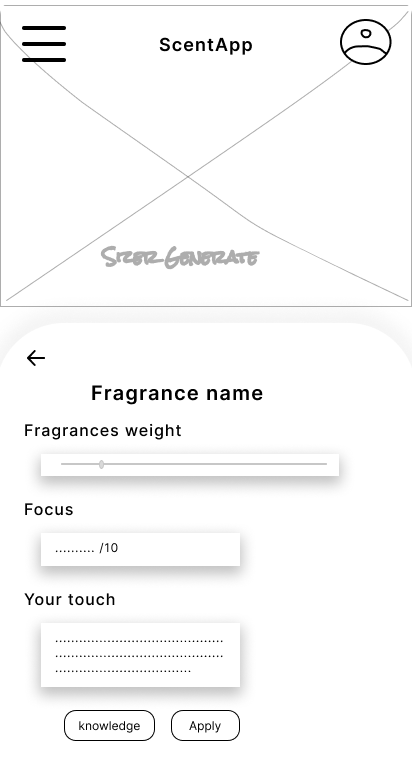
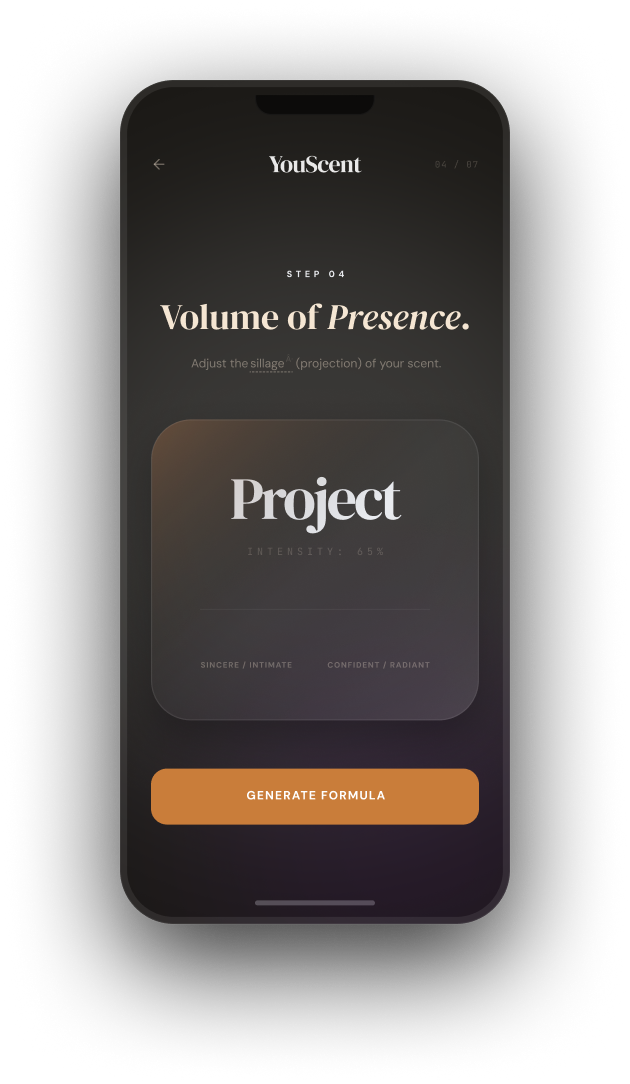
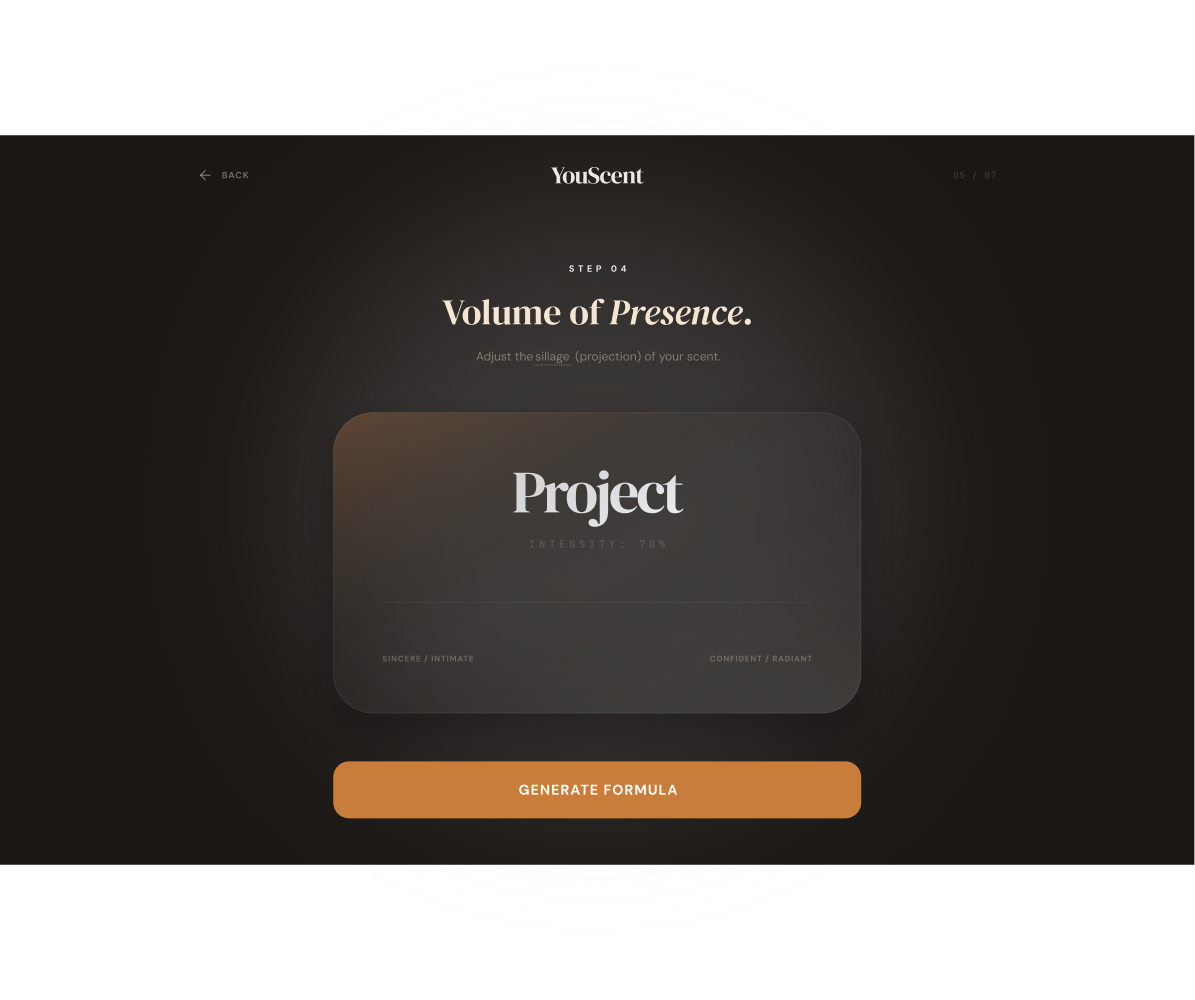
Iterating from technical ML/OZ sizing to an abstract "Volume" slider empowered users to control their scent's impact without needing industry jargon.
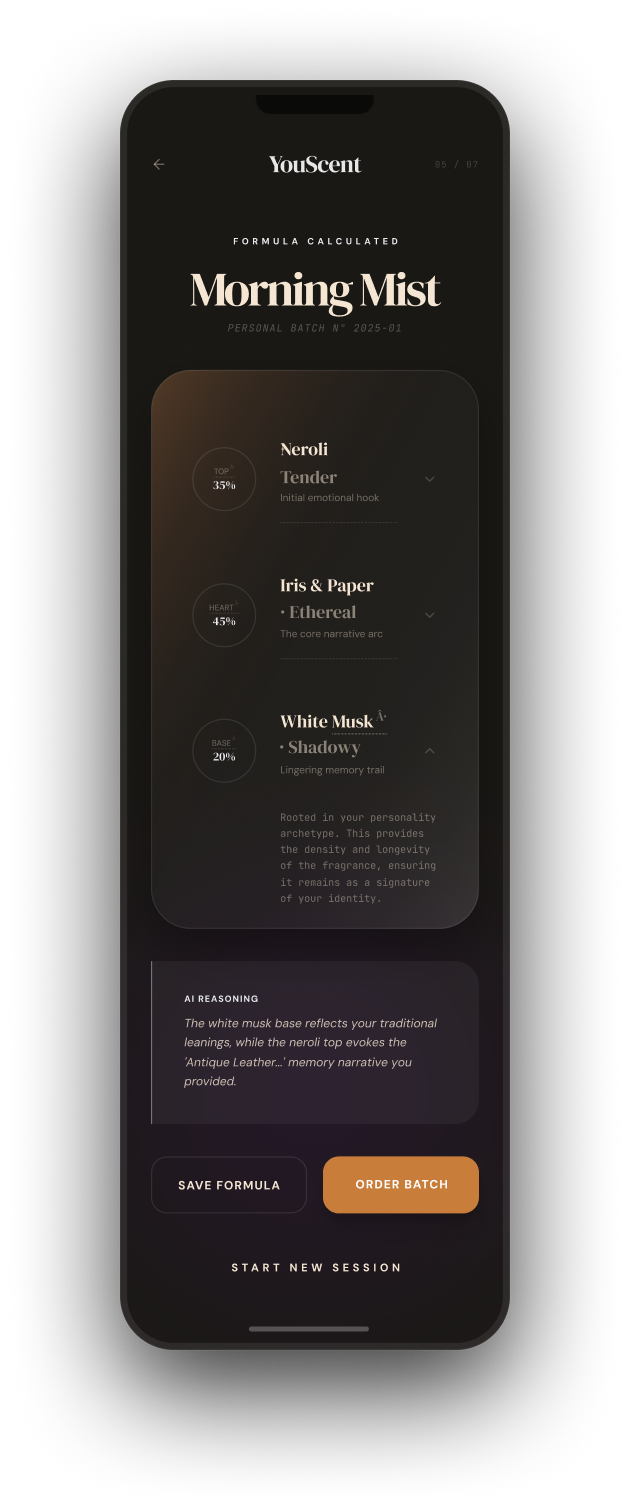
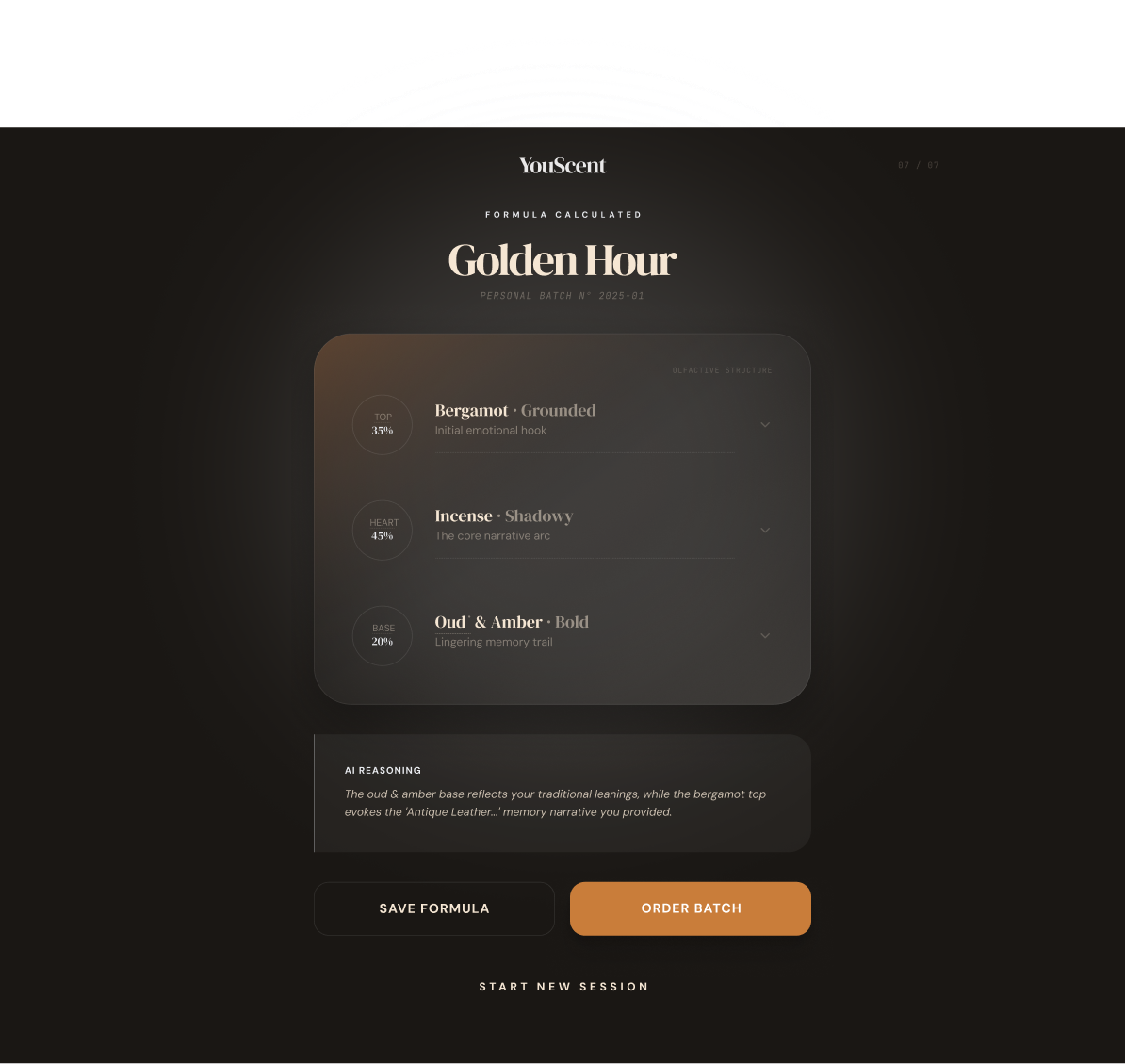
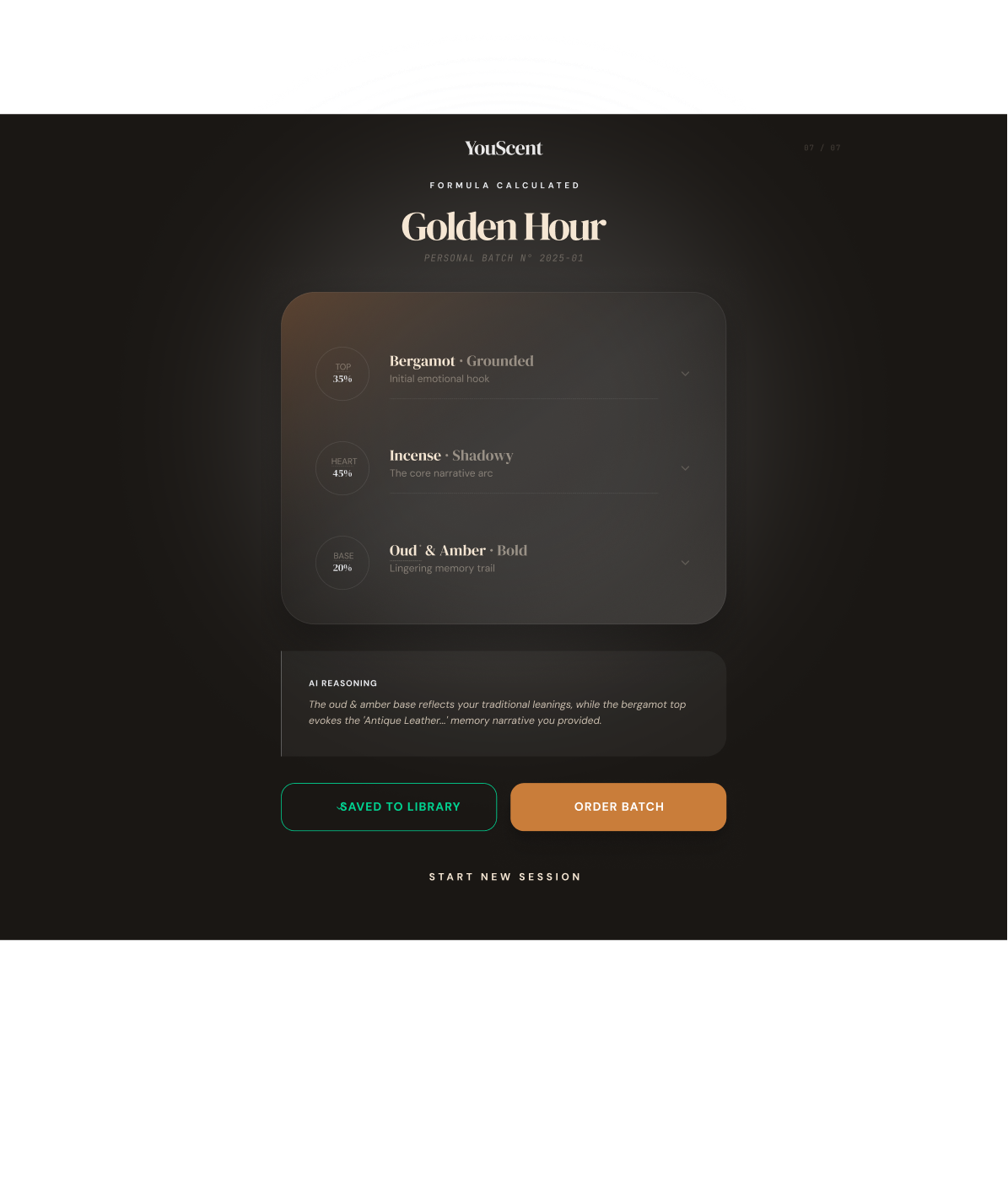
Consolidating fragmented confirmation steps into a singular, editorial reveal amplified the perceived value and magic of the custom formulation.
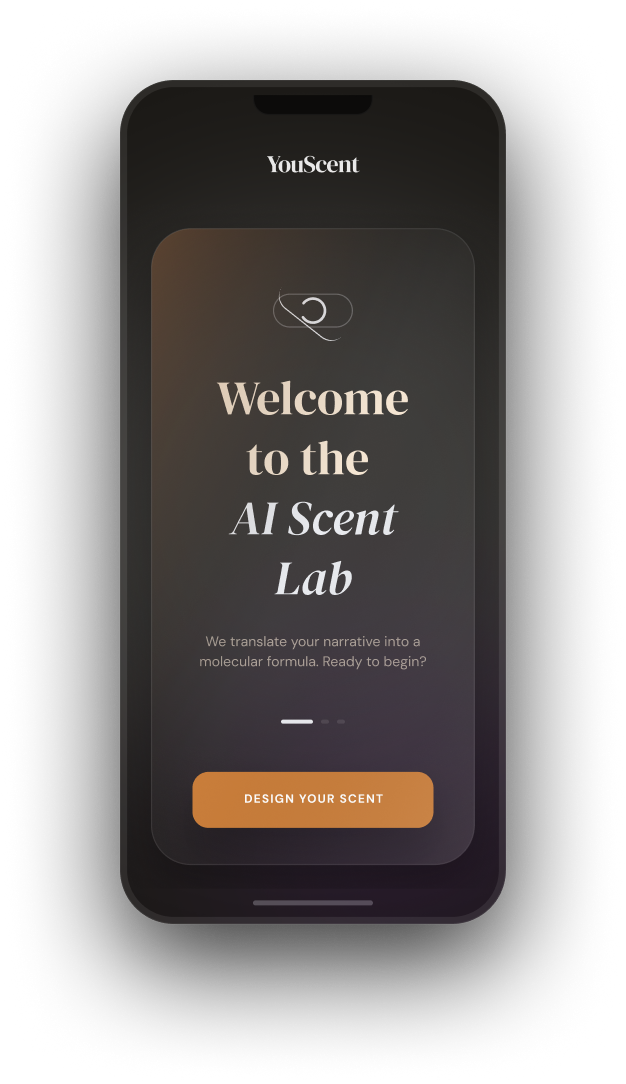
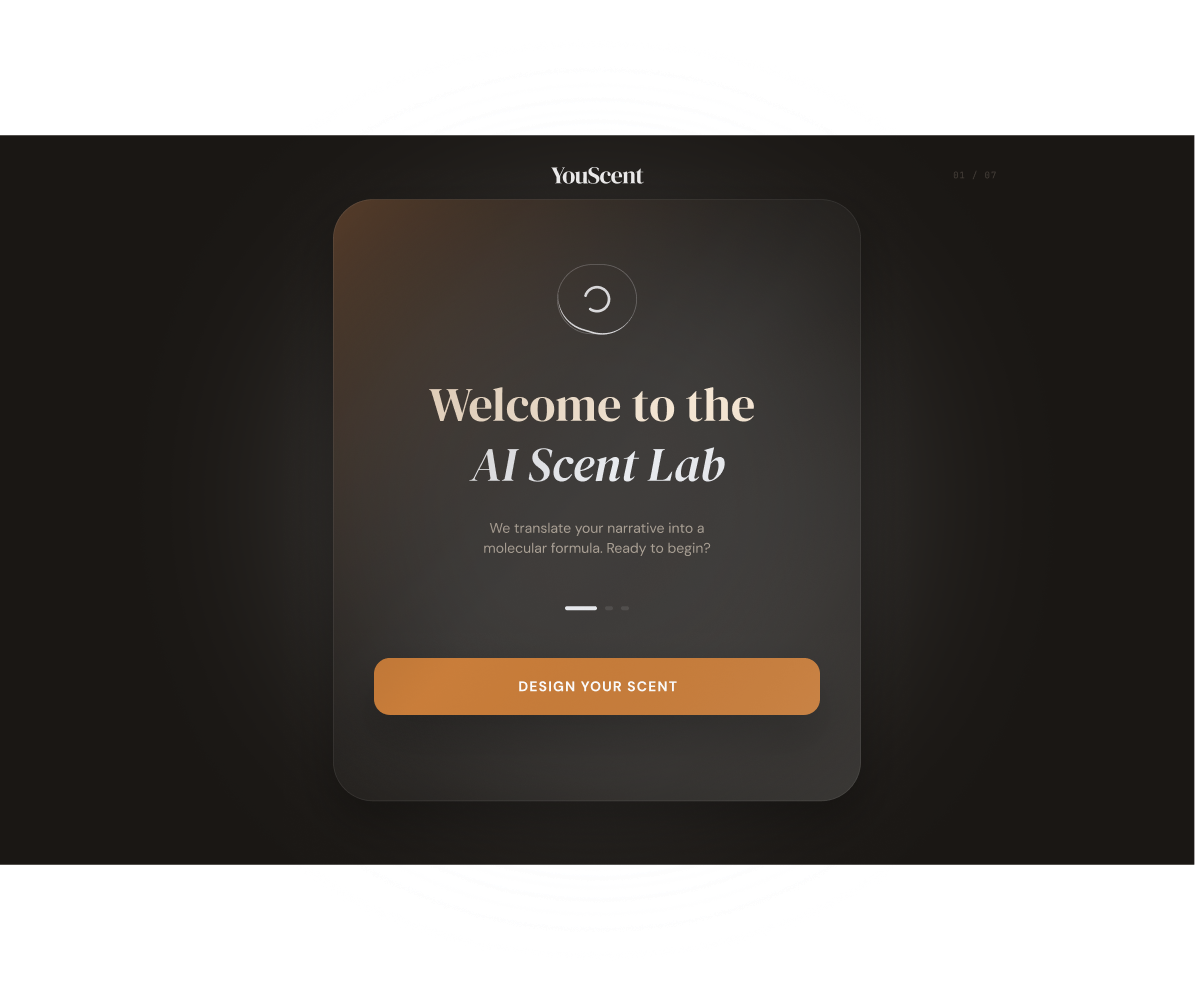
A minimalist, focused entry point establishes a premium editorial tone, eliminating cognitive clutter before the journey begins.
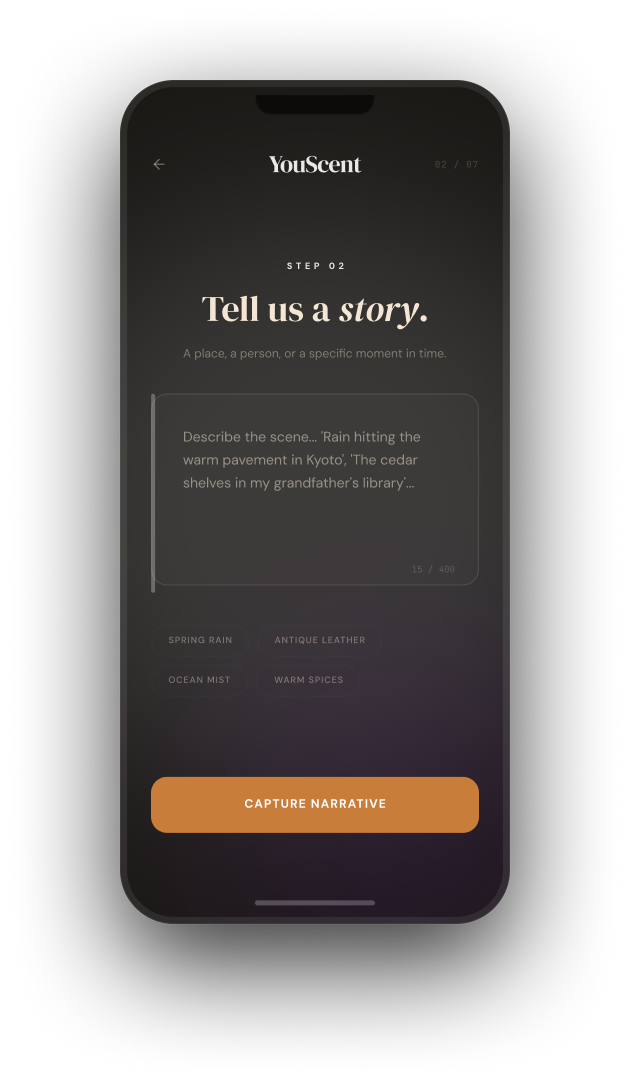
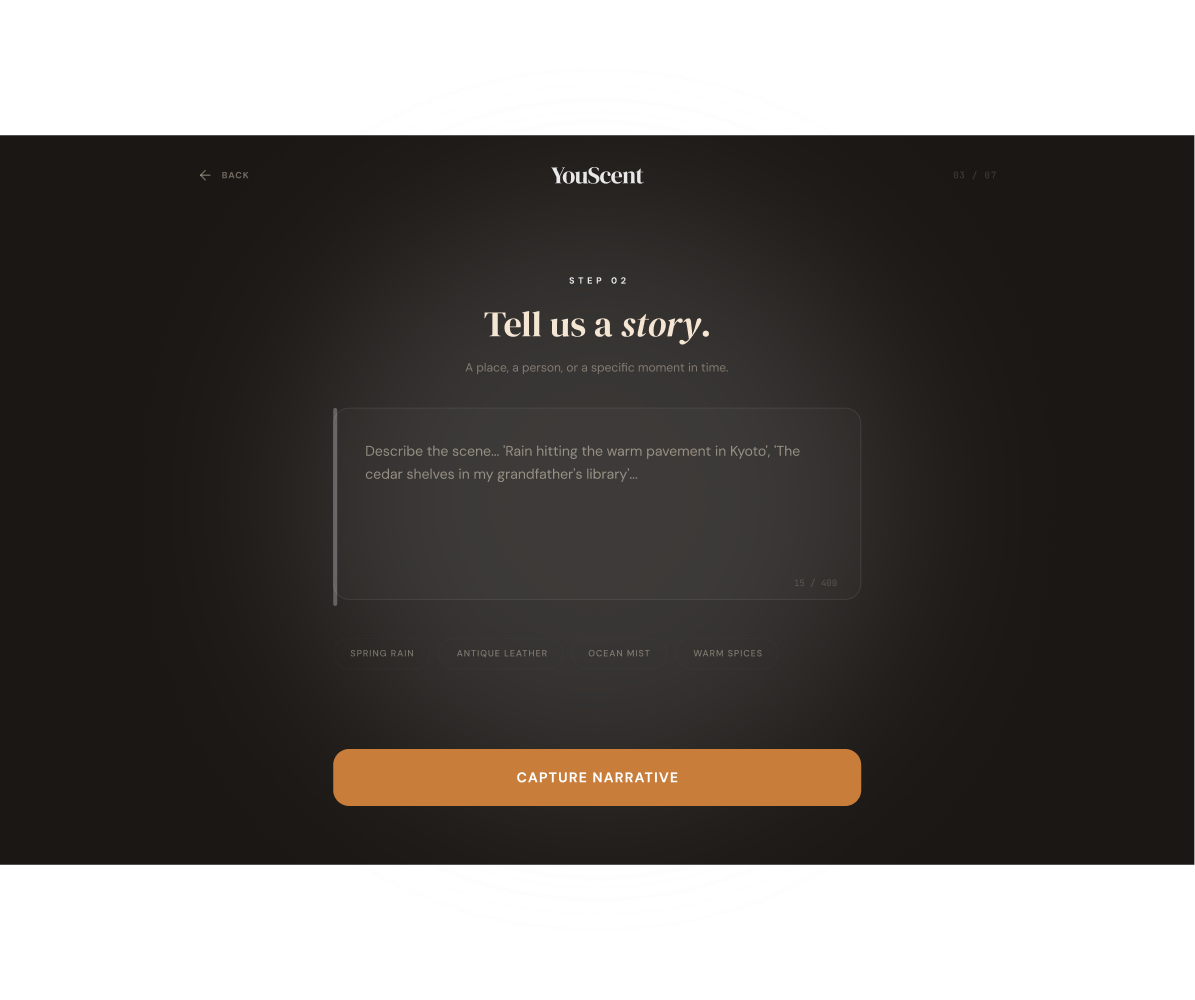
Introducing open-ended narrative input allowed users to inject personal context, deepening their emotional investment in the process.
Responsive adaptations translate the focused mobile journey into a cinematic desktop experience, utilizing expanded viewport space to enhance the luxury aesthetic.
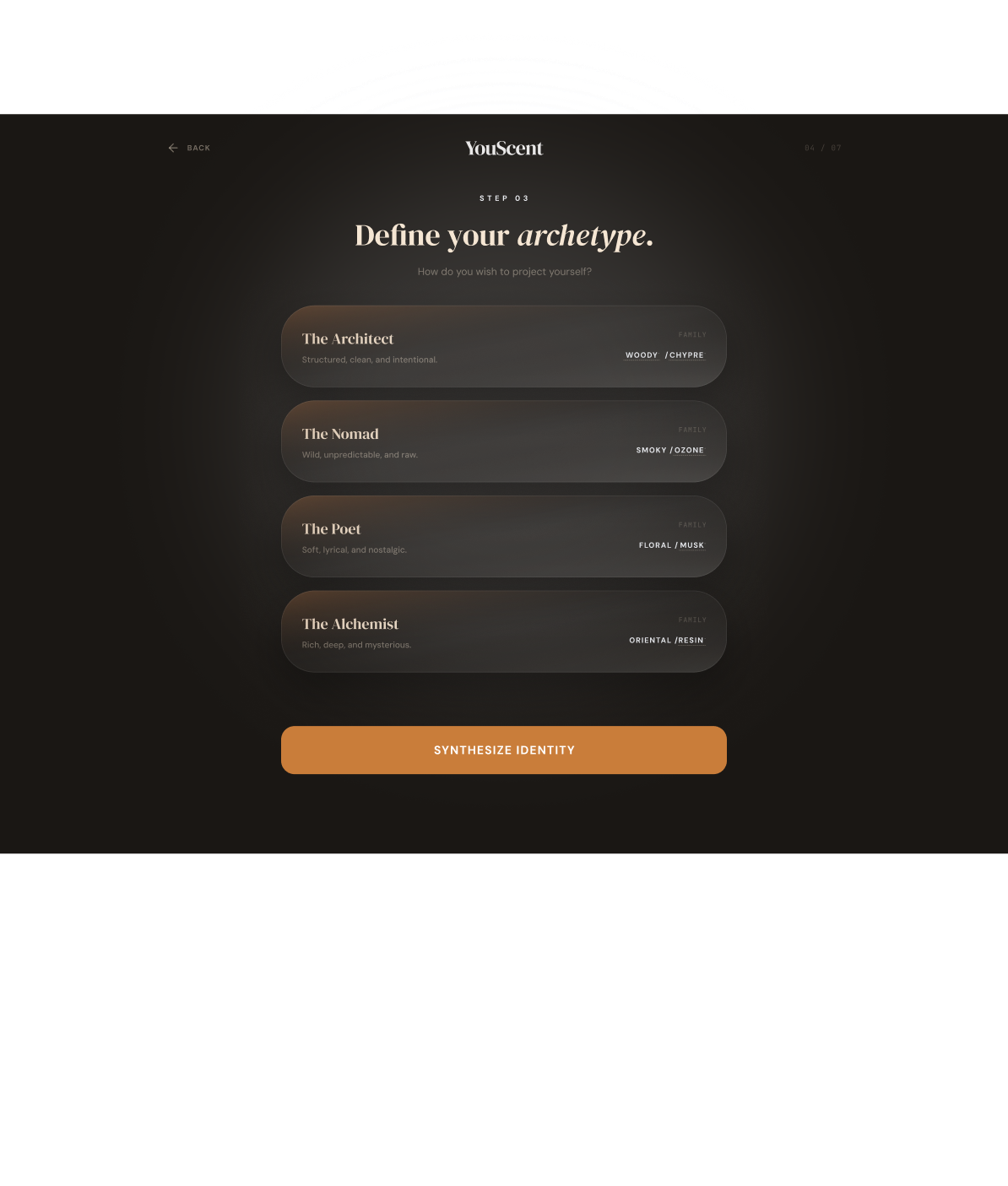
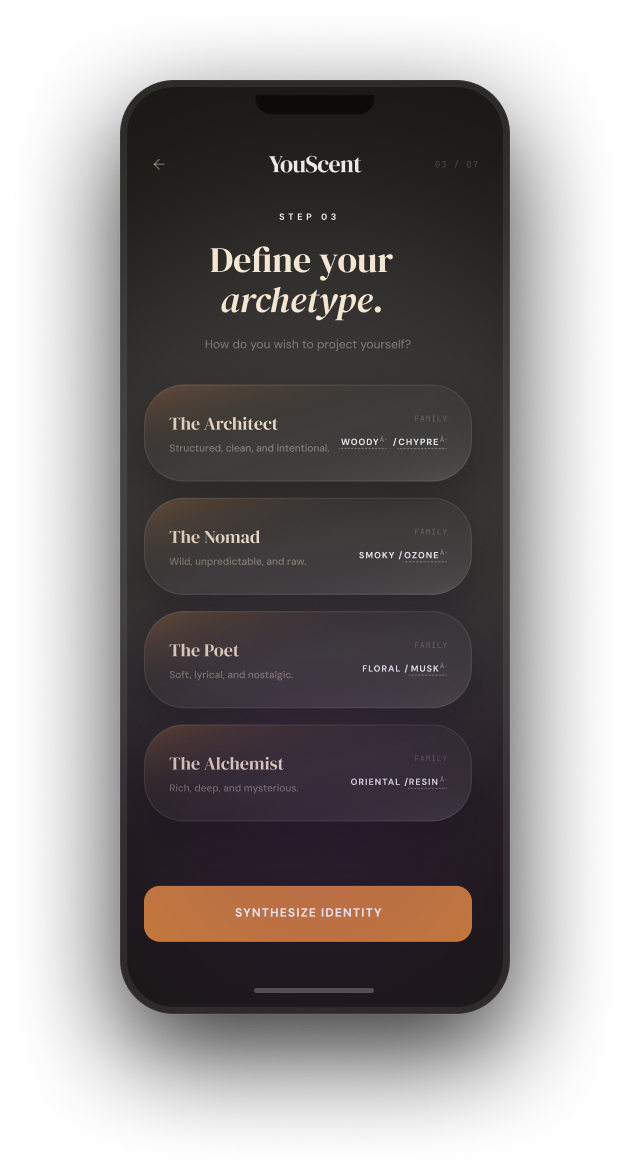
Framing complex fragrance families as relatable personas (Architect/Nomad/Poet/Alchemist) removed the barrier of domain ignorance, directly driving high completion rates.
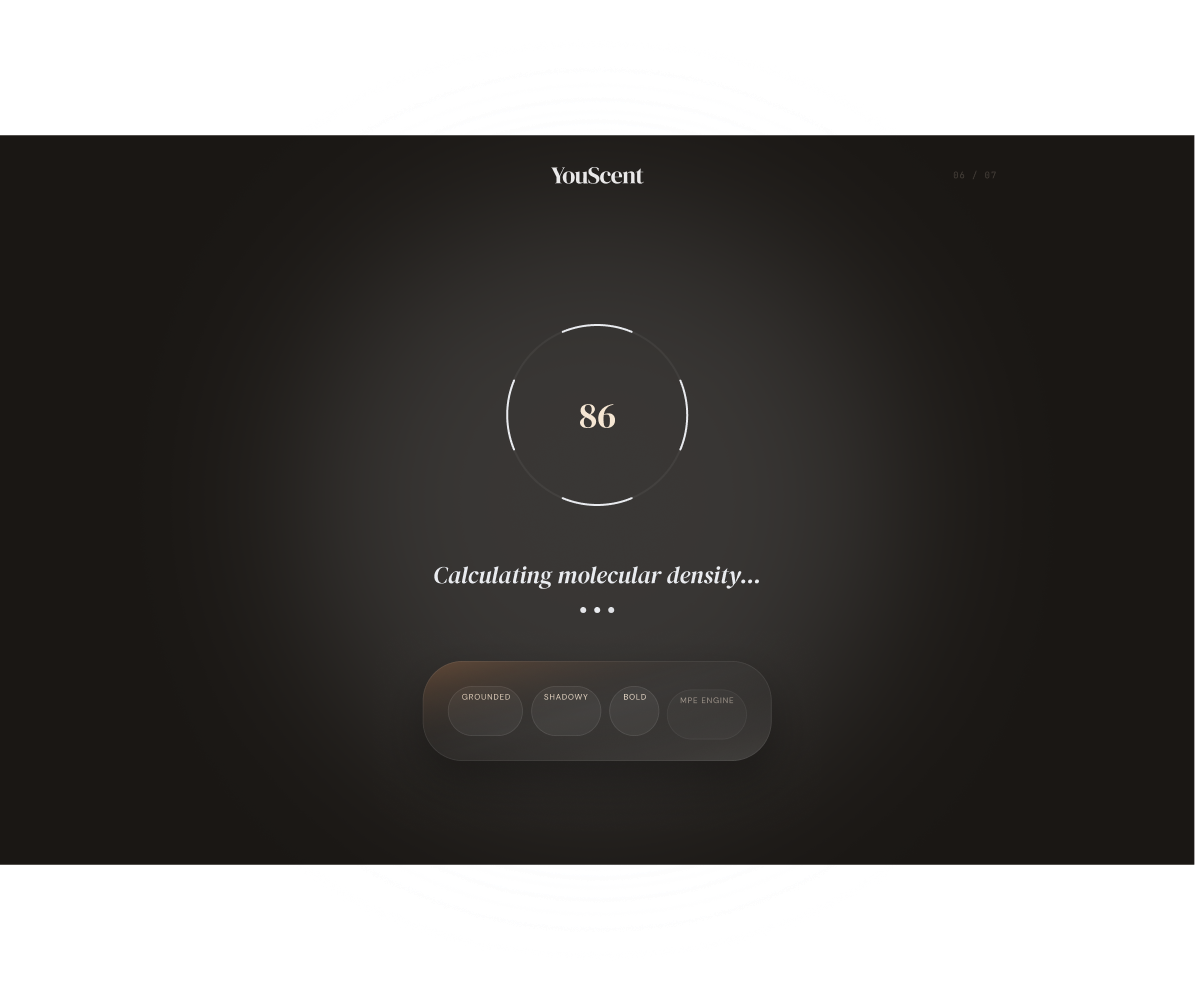
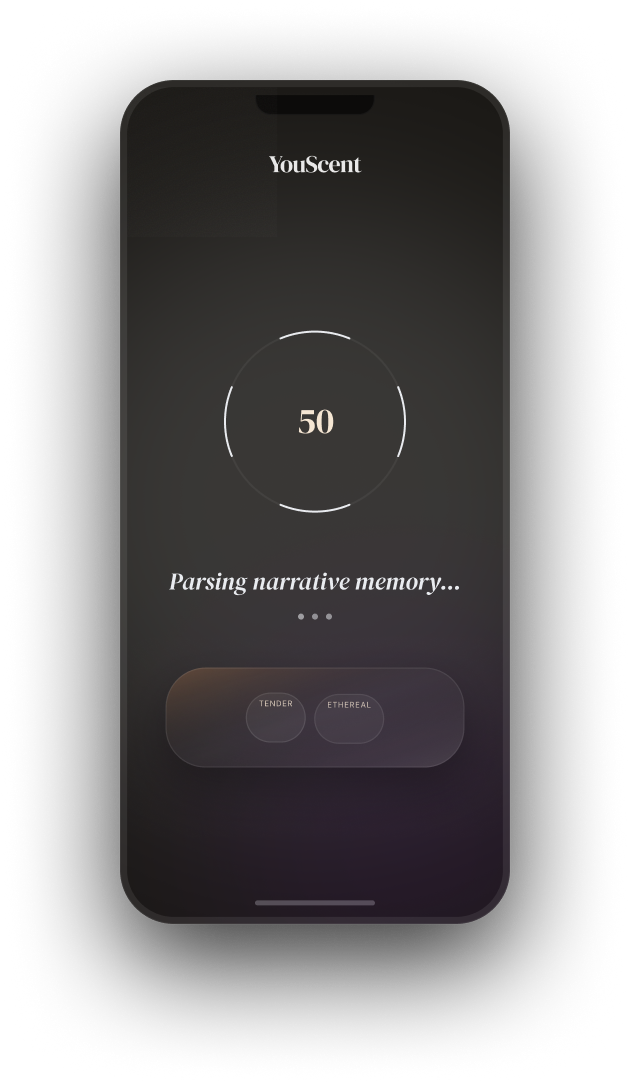
A transparent, animated system state managed latency expectations, preventing drop-offs by keeping users engaged while the AI processed their inputs.
"For the first time, a computer understood me. Not my demographics. Me."— Research Participant (Expert Group), 2025
An annotated usability testing snapshot, a compelling user quote card, or a simple data visualization charting the 88% success rate against industry baselines.
Savings per discovery cycle by automating the artisan/botanical translation layer, reducing manual intervention by 90%.
The team spent 40 hours in the field, observing artisan perfumers in Marrakech and auditing digital scent gaps.
Developed the MPE (Memory, Personality, Emotion) logic model to bridge qualitative story to quantitative molecules.
Two rounds of high-fidelity usability testing with 12 participants focusing on "The Explainability Gap".